
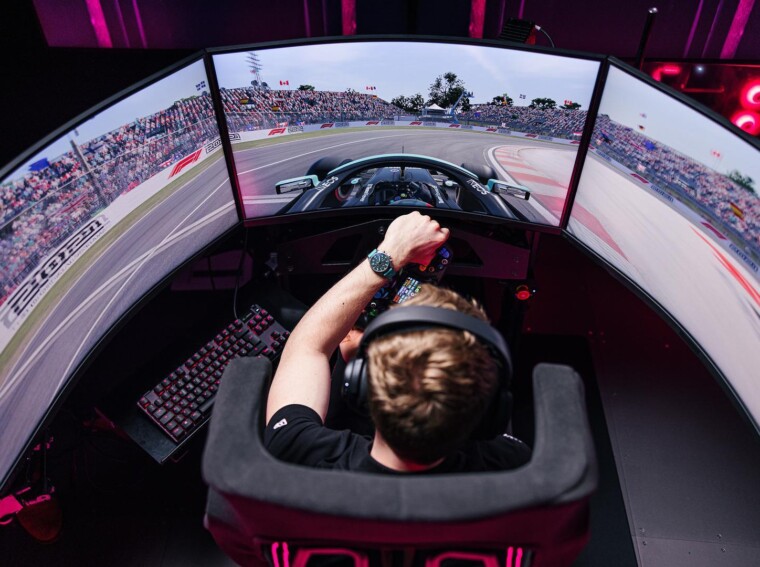
In recent years, sim racing has become increasingly popular, not just among gaming enthusiasts but also within the professional motorsport community. With the advancement of technology, modern simulators like the MOZA R5 bundle offer unprecedented realism that surpasses what was once considered merely a hobby. But just how realistic are these simulators, and how have they become valuable tools for professional drivers?
The Evolution of Sim Racing Technology
Sim racing technology has come a long way since its inception. Initially, video games served as mere entertainment, but the intricacy of software like iRacing, Assetto Corsa, and rFactor has redefined the concept. These platforms offer precise physics engines and real-life race track replicas, providing users with an authentic experience. Today’s simulators can replicate factors such as tyre wear, fuel consumption, and dynamic weather conditions, making virtual racing feel startlingly true to life.
Realism in Modern Simulators
The accuracy of modern simulators in replicating the real-world racing environment is staggering. High-quality graphics, coupled with force feedback technologies, create an immersive experience that mimics the feedback a driver would feel on the circuit. Advanced hardware, including direct drive wheels and responsive pedal systems, add tactile realism to the simulator, allowing users to experience the subtleties of car handling and track surface. Despite these advancements, it’s worth noting that simulators can’t fully replicate the physical forces experienced during real-world racing, such as G-forces in high-speed corners.
Professional Use of Simulators
Sim racing has transcended the realm of casual gaming, becoming integral to the training regimes of professional racers. Racing teams across the globe, including those in prestigious series like Formula 1, utilise simulators for driver training and car development. They offer a cost-effective and safe environment for drivers to familiarise themselves with new circuits and test vehicle setups without the risks associated with on-track testing. Simulators have also become invaluable for driver selection and assessment, providing measurable data to gauge a driver’s potential.
The Impact on Motorsport Culture
The rise of sim racing has brought significant changes to motorsport culture, fostering a new community of enthusiasts and professionals. It has democratised racing, allowing individuals without the means to access traditional motorsport opportunities to engage in competitive racing. Online leagues and eSports events garner substantial audiences and sponsorships, further legitimising sim racing as a parallel motorsport discipline. This growing culture has also encouraged the adaptability of younger drivers who are accustomed to the digital environment.
The Future of Sim Racing and Real-World Racing Integration
As technology continues to evolve, the convergence between sim racing and real-world racing is expected to intensify. Innovations in virtual and augmented reality may further blur the lines between virtual and physical racing. Race teams are likely to continue investing in this technology for strategic advantage, and racing licences could soon integrate simulator experience as a part of their competency assessments. As sim racing solidifies its place within the motorsport landscape, the synergy between virtual and real-world racing will undoubtedly continue to grow, enriching the sport as a whole.
Ben Austin is the founder and CEO of Absolute Digital Media, a UK-based SEO and digital marketing agency established in 2008. The agency specialises in regulated industries including iGaming SEO, financial services, legal, and healthcare, and has accumulated over 175 industry awards. Ben has 17 years of hands-on experience in technical SEO, link acquisition, and search strategy for compliance-sensitive sectors. He writes on organic search, AI-driven visibility, and LLM citation optimisation.
