
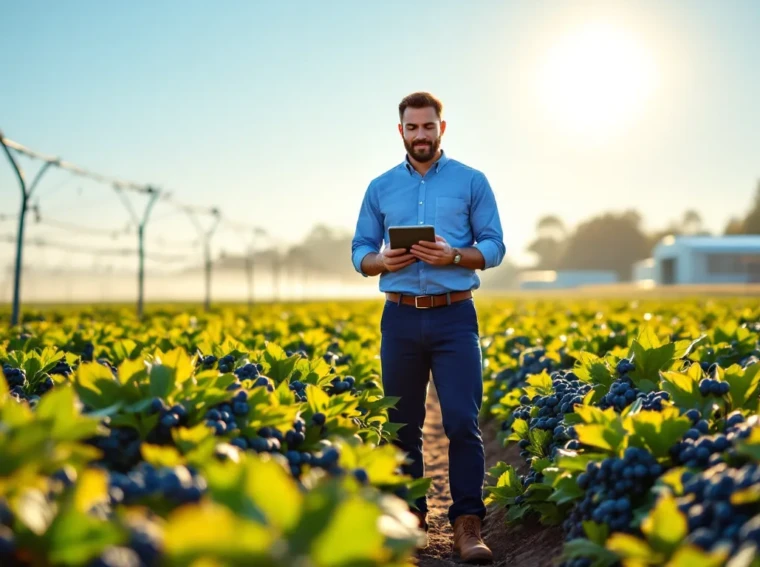
Summer in Stardew Valley is when serious farmers separate themselves from amateurs. While spring teaches you the basics, summer’s where strategic crop selection can transform a struggling farm into a money-printing operation. Choose the wrong crops, and you’ll limp into fall with empty pockets. Pick the right ones, and you’re looking at upgraded tools, expanded barns, and a Community Center that’s actually progressing.
The short answer? Blueberries dominate for raw profit in year one, while Starfruit and Hops take over once you’ve unlocked processing and kegs. But that’s oversimplifying what’s actually a nuanced decision based on your current resources, farming level, and long-term strategy. This guide breaks down every profitable summer crop, compares them with hard numbers, and shows you exactly how to maximize returns whether you’re planting your first seeds or optimizing a late-game greenhouse.
Key Takeaways
- Blueberries are the best summer crop for year-one farmers, offering up to 4 harvests per season with a 12,000g profit per 100 tiles compared to other options.
- Starfruit and Hops become the most profitable summer crops once you unlock kegs and processing infrastructure, turning single harvests into wine and Pale Ale worth 3-5x raw crop value.
- Quality Sprinklers are essential by summer—craft 10-20 before Summer 1 to maximize efficiency and avoid wasting energy on hand-watering 80+ tiles daily.
- Processing crops through kegs and Preserve Jars multiplies profits dramatically, especially with the Artisan profession at Farming Level 10, making Blueberry Wine worth 4x a raw berry’s value.
- Complete Community Center summer bundles early (Red Cabbage, Melons, Blueberries) to unlock the Greenhouse, which fundamentally changes late-game crop planning and enables year-round Ancient Fruit production.
- Avoid planting high-seed-cost crops like Starfruit without kegs in year one, and don’t plant Hops without 30+ kegs ready—stick to Blueberries to build capital for fall and winter upgrades.
Why Summer Crops Matter for Your Farm’s Success
Summer isn’t just another season, it’s your first real opportunity to scale up. Spring crops like Cauliflower and Potatoes teach fundamentals, but they don’t offer the repeating-harvest efficiency that defines summer’s best options. The stardew valley spring crops phase is about establishing a foundation: summer’s about building wealth.
The season runs 28 days, and unlike spring’s cautious start, you should hit Summer 1 with a plan. By now, you’ve likely unlocked Quality Sprinklers (Farming Level 6) or at least have a grid of Basic Sprinklers. Your energy management’s better, you understand crop timing, and you’ve got some gold saved from spring’s Strawberry harvest if you bought seeds at the Egg Festival.
Summer crops offer three key advantages over other seasons: multiple high-yield repeating crops, access to Starfruit (if you’ve unlocked the Desert), and crops that process into extremely valuable artisan goods. Many players make the mistake of treating summer like spring, planting single-harvest crops and wondering why they’re broke by Fall 1. The stardew valley most profitable crops almost always involve repeat harvests or artisan processing, and summer delivers both.
Your summer strategy also sets up fall and winter success. The gold you generate now funds fall’s Ancient Fruit setup, your Deluxe Barn upgrades, and critical tool improvements. Skimp on summer optimization, and you’re playing catch-up for the rest of year one.
The Best Summer Crops Ranked by Profitability
Blueberries: The Most Profitable Summer Crop
Blueberries are the undisputed king of summer farming for most players, especially in year one. Here’s why the math works:
- Seed cost: 80g at Pierre’s
- Sell price: 50g per berry (base quality)
- Growth time: 13 days initial, then harvest every 4 days
- Total harvests: Up to 4 harvests per season (planted on Summer 1)
Plant 100 Blueberry seeds on Summer 1, and you’re looking at roughly 400 berries by season’s end (since each plant produces 3 berries per harvest). That’s 20,000g gross revenue minus 8,000g seed cost = 12,000g profit per 100 tiles. No other summer crop beats this return for year-one farmers without significant infrastructure.
The beauty of Blueberries is accessibility. You don’t need the Desert unlocked, you don’t need kegs, and you don’t need high Farming skill. Plant them, water them (or better, use sprinklers), and collect absurd profits every four days. When evaluating the best crops stardew valley offers during summer, Blueberries win on simplicity and raw gold-per-tile.
One caveat: Blueberries are tedious without sprinklers. Watering 100+ tiles daily burns energy and time. If you’re still hand-watering, scale your operation to match your energy pool or prioritize crafting Quality Sprinklers immediately.
Starfruit: High-Value Crop for Advanced Players
Starfruit is the luxury option, highest base sell price in summer at 750g per fruit, but it requires unlocking the Calico Desert (complete the Vault bundle or buy the Bus Repair from Joja). Seeds cost 400g each from the Desert trader, and the crop takes 13 days to mature with no repeat harvests.
The profit math:
- Seed cost: 400g
- Sell price: 750g base, 937g with silver quality, 1,125g with gold quality
- Net profit per tile: 350g minimum (base quality)
Starfruit shines when processed. A single Starfruit Wine sells for 2,250g (3,150g with Artisan profession), turning that 400g seed into 1,850g profit after a week in the keg. For players with keg infrastructure, Starfruit is the best summer crop stardew valley offers for pure gold-per-tile potential.
But here’s the trap: if you’re in year one without kegs, Starfruit underperforms compared to Blueberries. The high seed cost and single harvest mean you need processing to justify the investment. Save Starfruit for late game, or plant a small batch to start building your wine operation.
Hops: Best for Artisan Goods Production
Hops are controversial, low base value (25g per hop) but insane keg potential. Hops grow on trellises, mature in 11 days, then produce daily harvests for the rest of summer. That’s 18 hops per plant if planted on Summer 1.
Raw profit is mediocre: 450g per plant for the season minus 60g seed cost = 390g profit per tile. But turn those hops into Pale Ale (kegs required, 1-2 day processing time), and each hop becomes 300g (420g with Artisan). Suddenly that single tile generates 5,400g per season in Pale Ale revenue.
The problem? You need 18 kegs per Hops plant to keep up with daily harvests. Most year-one players don’t have that infrastructure. Hops are a mid-to-late game play, ideal once you’ve got a Barn or Shed stuffed with kegs. For players with farming profession choices already optimized, Hops become a passive gold generator.
Don’t plant Hops in year one unless you’ve got at least 30+ kegs ready. Otherwise, stick with Blueberries or Melons.
Melons: Solid Choice for Early Game
Melons are the safe, boring, reliable option. They’re single-harvest like Starfruit but affordable and accessible from day one.
- Seed cost: 80g
- Sell price: 250g base quality
- Growth time: 12 days
- Net profit per tile: 170g base, higher with quality crops
Melons work well if you’re still building your farm and don’t want to commit to Blueberry micromanagement. They’re also required for the Quality Crops bundle if you’re going the Community Center route. Plant a small Melon patch (20-30 seeds) for bundle completion, then focus your main field on Blueberries.
Melons become more attractive with Deluxe Speed-Gro, which cuts growth time to 8 days and allows two full harvests per summer. But fertilizer costs eat into profits, so the math only works if you’re swimming in resources.
Red Cabbage: Unlocking the Artisan Bundle
Red Cabbage is mostly utility, not profit. Seeds cost 100g, the crop takes 9 days to grow, and it sells for 260g (160g profit). That’s worse than Melons and laughable compared to Blueberries.
So why plant it? Red Cabbage is required for the Dye Bundle in the Community Center. You can’t access seeds until year two unless you get lucky with the Traveling Cart (appears Fridays and Sundays in Cindersap Forest). If the Cart has Red Cabbage seeds in year one summer, buy one and plant immediately, it’ll save you months of waiting.
Plant exactly one Red Cabbage for the bundle, then ignore this crop entirely. It exists to gate your Community Center progress, not to make you rich.
Optimizing Your Summer Farming Strategy
Quality Fertilizer and Speed-Gro: When to Use Each
Quality Fertilizer increases your chance of producing silver and gold star crops. Gold-quality Blueberries sell for 75g instead of 50g, a 50% boost that compounds over four harvests. Quality Fertilizer costs 10g to craft (2 Sap + 1 Fish) and lasts the entire season once applied.
The math works best on high-value single-harvest crops like Melons or Starfruit. A gold-quality Starfruit sells for 1,125g vs. 750g base, that’s 375g extra per plant, easily justifying the fertilizer cost. For repeating crops like Blueberries, the boost is nice but not mandatory unless you’re chasing maximum profit.
Speed-Gro and Deluxe Speed-Gro reduce growth time. Basic Speed-Gro cuts 10% (1-2 days for most crops), while Deluxe Speed-Gro cuts 25%. This matters most for single-harvest crops where faster maturity = more planting cycles.
Deluxe Speed-Gro on Melons drops growth from 12 to 8 days, allowing two full harvests (Summer 1-8, replant Summer 9-16, still have time for a third if you’re fast). According to guidance on multi-harvest optimization from Game8, Speed-Gro on repeat-harvest crops barely moves the needle, you save one day on initial growth, but subsequent harvests remain the same interval.
General rule: Use Quality Fertilizer on Starfruit and Melons, use Deluxe Speed-Gro only if you’re doing multi-cycle Melon farming. Skip fertilizer on Blueberries unless you’re overflowing with resources.
Sprinkler Layouts for Maximum Efficiency
Sprinklers are non-negotiable by summer. Hand-watering is for spring: summer’s about scaling up. Here’s the breakdown:
- Basic Sprinkler (Farming Level 2): Waters 4 adjacent tiles. Terrible efficiency, avoid unless desperate.
- Quality Sprinkler (Farming Level 6): Waters 8 surrounding tiles in a 3×3 grid. This is your summer workhorse.
- Iridium Sprinkler (Farming Level 9): Waters 24 tiles in a 5×5 grid. Late-game luxury.
Quality Sprinklers require 1 Iron Bar, 1 Gold Bar, and 1 Refined Quartz each. Expensive early game, but they pay for themselves in saved energy and time. Craft 10-20 Quality Sprinklers before Summer 1, and you can water 80-160 tiles without lifting a Watering Can.
Optimal layout: Arrange Quality Sprinklers in a grid where their 3×3 coverage overlaps minimally. Place them every 5 tiles horizontally and vertically for maximum coverage. Leave pathways between sections for easy harvesting.
If you’re still using Basic Sprinklers, prioritize the Farming skill grind. Fish during rainy days (Fishing gives no Farming XP), focus on crop harvests, and rush to Level 6. Every day you delay Quality Sprinklers is wasted profit potential.
Balancing Crops with Skill Leveling
Farming XP in Stardew Valley comes from harvesting crops, not planting, not watering, just harvesting. Repeat-harvest crops like Blueberries give XP on every pick, making them fantastic for leveling Farming skill while generating profit.
Each Blueberry harvest (100 plants x 3 berries = 300 individual picks) grants 300 Farming XP. Over four summer harvests, that’s 1,200 XP from one crop. For comparison, a single Melon harvest gives 100 XP (one pick per plant). The XP efficiency of the best crops stardew valley has to offer often correlates with repeat harvests.
Why does this matter? Higher Farming levels unlock better sprinklers, profession choices at Level 5 and 10, and increased crop quality chances. Prioritizing XP-heavy crops in year one accelerates your entire farming operation.
Level 5 profession choice: Pick Tiller (+10% crop sell price) unless you’re committed to animal products. The 10% boost applies to everything, Blueberries, Starfruit, even processed goods if you go Artisan at Level 10. The alternative, Rancher, is only worth it for dedicated animal farmers.
Level 10 profession choice: Artisan (+40% artisan goods sell price) is the meta endgame choice. It multiplies the value of wine, jelly, and Pale Ale, making it mandatory for late-game profit maximization.
Year 1 vs. Late Game Summer Crop Planning
Best Summer Crops for First Year Farmers
Year one summer is about cash flow and infrastructure. You probably finished spring with 5,000-15,000g saved (depending on Strawberry investment), and you need that gold to scale up. According to tips from GameRant on early progression, the stardew valley best spring crop year 1 strategy carries into summer: prioritize repeating crops with low maintenance.
Here’s the optimal year-one summer plan:
- Days 1-3: Buy 100-200 Blueberry seeds (8,000-16,000g investment). Plant immediately with Quality Sprinklers if possible.
- Days 4-10: Craft more sprinklers, clear additional land, plant a second wave of Blueberries if you’ve got excess gold.
- Mid-summer: First Blueberry harvest (Day 13-14). Reinvest profits into more seeds or sprinkler materials.
- Late summer: Continue Blueberry harvests every 4 days. Bank gold for fall Ancient Fruit or Cranberry seeds.
Avoid these year-one mistakes:
- Don’t plant Starfruit without kegs. The seed cost is too high for raw selling.
- Don’t over-diversify. Stick to 80% Blueberries, 10% Melons (for bundle), 10% experimental crops.
- Don’t neglect sprinkler crafting. Every hour spent hand-watering is an hour not spent mining for sprinkler materials.
By Summer 28, a well-managed farm should have 30,000-50,000g banked from Blueberry sales alone. That’s enough to fund fall’s Cranberry operation and start building kegs for the following year.
Late Game Strategies: Greenhouse and Ginger Island
Once you’ve completed the Community Center (or bought the Joja membership), you unlock the Greenhouse, a 12×10 indoor farming space where any crop grows year-round. This fundamentally changes summer crop planning.
In late game, summer crops serve two purposes:
- Outdoor fields: Mass-plant Hops for Pale Ale production, or Starfruit for wine.
- Greenhouse: Grow Ancient Fruit year-round (not technically a summer crop, but it overwrites seasonal planning).
The stardew valley best crops per season calculation flips when you have the Greenhouse. Suddenly you’re not optimizing for 28-day windows, you’re optimizing for perpetual harvests. Ancient Fruit produces every 7 days indefinitely, and Ancient Fruit Wine sells for 2,310g per bottle (3,234g with Artisan). This makes outdoor summer crops like Blueberries obsolete for raw profit.
Ginger Island (unlocked post-Community Center, requires boat repair) adds another 878 tillable tiles with no seasonal restrictions. Late-game farmers plant Starfruit on the Island year-round, turning it into a dedicated wine factory. Summer in mainland Stardew becomes almost irrelevant, you’re farming tropically 365 days a year.
For players at this stage, summer is about maintaining keg throughput and enjoying the aesthetic. The intense min-maxing of year one summer fades into automated wealth generation. Players exploring various skill tree decisions find that late-game success depends more on automation and processing than raw crop selection.
Common Summer Farming Mistakes to Avoid
Even experienced players fall into these traps:
Planting too late: Seeds planted after Summer 15 often don’t mature before Fall 1. Blueberries need 13 days to first harvest, meaning anything planted after Summer 16 gets only one or two picks. Plan your final planting cycle carefully, if it’s Summer 18 and you’re buying new seeds, you’re wasting gold.
Ignoring the Lightning Rod: Summer storms are frequent. Without Lightning Rods (Foraging Level 6, costs 1 Iron Bar + 1 Refined Quartz + 5 Bat Wing), lightning destroys crops randomly. Losing a field of mature Blueberries to a storm is devastating. Craft 5-10 Lightning Rods and scatter them across your farm before summer starts.
Over-investing in Hops without kegs: Hops are worthless without processing infrastructure. A common year-one mistake is planting 50+ Hops because “they produce daily,” then realizing you have 900 raw hops worth 22,500g when they could’ve been 270,000g in Pale Ale. If your keg count is below 50, plant Blueberries instead.
Forgetting to save seeds for next year: Once you’ve leveled Farming to 9-10, consider making some summer crops into seeds using the Seed Maker (unlocked at Farming Level 9, costs 1 Gold Bar + 10 Coal + 1 Wood). Blueberry seeds from a Seed Maker cost nothing, allowing infinite replanting in future summers. This is more of a year-two optimization, but planning ahead saves thousands.
Neglecting Community Center bundles: Red Cabbage for the Dye Bundle, Melon for Quality Crops, Blueberry for the Artisan Bundle, summer has multiple bundle requirements. Check the Community Center before committing your entire field to one crop. Missing a bundle crop means waiting another year or relying on the Traveling Cart’s RNG.
Skipping fishing on rainy days: Rain means no watering. That’s free energy for mining, fishing, or socializing. Many players water on rainy days out of habit, wasting time. On rain days, hit the mines for ore and gems, or fish for gold and Farming materials. Efficiency in summer means maximizing every hour.
Not using preserve jars and kegs strategically: A Preserve Jar takes any vegetable or fruit and turns it into jelly or pickles. Processing time is faster than kegs (about 3 days), making jars useful for crops you harvest faster than kegs can handle. If you’re overwhelmed with Blueberries and only have 10 kegs, use Preserve Jars to process the overflow. Blueberry Jelly sells for 150g (base 50g berry x 2 + 50g), tripling your profit.
Turning Your Harvest into Maximum Gold
Processing Crops vs. Selling Raw
Raw selling is immediate cash. Processing is delayed but multiplies value. The choice depends on your current needs.
When to sell raw:
- You need gold NOW for tool upgrades or building purchases
- You lack processing infrastructure (kegs, jars)
- Your inventory is full and you can’t store crops
When to process:
- You’ve got 20+ kegs or Preserve Jars
- You’re not desperate for immediate gold
- You’ve unlocked Artisan profession (Level 10 Farming)
The profit difference is enormous. A raw Blueberry sells for 50g. Blueberry Wine (requires keg, 6-7 day processing) sells for 150g base, 210g with Artisan. That’s a 4x multiplier for players with Artisan. Over 100 Blueberry plants producing 400 berries per season, processing nets an extra 64,000g profit (210g wine – 50g raw = 160g extra x 400 berries).
Preserve Jars are faster but less profitable. Blueberry Jelly takes 3 days and sells for 150g (210g with Artisan). Jars work better for crops you harvest in large batches, while kegs handle high-value crops like Starfruit.
Optimal setup by progression stage:
- Year 1, Summer: Sell Blueberries raw. Invest profits into sprinklers and fall seeds. Start crafting 10-20 kegs.
- Year 2, Summer: Process 50% of harvest. Sell raw only when kegs are full.
- Year 3+: Process everything. Raw selling is for emergencies only.
Resources from Twinfinite’s processing guides emphasize that artisan goods generate more wealth than any raw crop strategy, making processing the endgame meta for serious farmers.
Completing Community Center Bundles
Summer crops satisfy multiple Community Center bundles. Completing these unlocks massive rewards: Greenhouse (Pantry bundles), Minecarts (Boiler Room), and more. Here’s what you need:
Quality Crops Bundle (Pantry):
- 5 gold-star Melons
- (Also requires gold-star Parsnips, Cauliflower, Pumpkin, Corn)
Plant 10-15 Melons with Quality Fertilizer to guarantee you’ll get five gold-star harvests. If your Farming level is low, plant extra, gold-star chance increases with Farming skill.
Summer Crops Bundle (Pantry):
- 1 Tomato
- 1 Hot Pepper
- 1 Blueberry
- 1 Melon
Easy to complete. Plant at least one of each crop early summer, harvest, and donate.
Dye Bundle (Bulletin Board):
- 1 Red Cabbage
- (Also requires other items from different seasons)
Red Cabbage is the blocker. Seeds aren’t sold until year two summer unless you luck into Traveling Cart seeds. If you see Red Cabbage seeds at the Cart in year one (Fridays and Sundays, random stock), buy immediately. This single purchase saves you 8+ months of waiting.
Artisan Bundle (Pantry):
- Requires processed goods, but you’ll need summer crops like Blueberries to make Jelly/Wine for this bundle.
Prioritize Community Center completion. The Greenhouse alone justifies rushing bundles, it turns winter from dead time into perpetual Ancient Fruit profit. Players who’ve already worked through mining decisions and combat builds know that progression in Stardew compounds, early bundle completion unlocks tools that accelerate everything else.
Conclusion
Summer crops are where Stardew Valley farming shifts from survival to wealth generation. Blueberries dominate year one with their repeating harvests and accessible profit margins. Once you’ve built up infrastructure, Starfruit and Hops processed into wine and Pale Ale become the ceiling for gold-per-tile returns. The key is matching crop choice to your current progression, don’t plant Starfruit in year one without kegs, and don’t skip Blueberries just because they seem boring.
The best summer crops stardew valley players choose aren’t about following a rigid meta, they’re about understanding the math, timing your harvests, and scaling your operation with sprinklers and processing buildings. Nail your summer strategy, and you’ll enter fall with a war chest big enough to unlock the Greenhouse, upgrade your entire toolset, and set up the Ancient Fruit empire that defines late-game wealth.
Whether you’re a first-time farmer or a veteran optimizing your tenth playthrough, summer’s where strategy pays off. Plant smart, process efficiently, and watch your farm transform from a hobby into a gold-generating machine.