
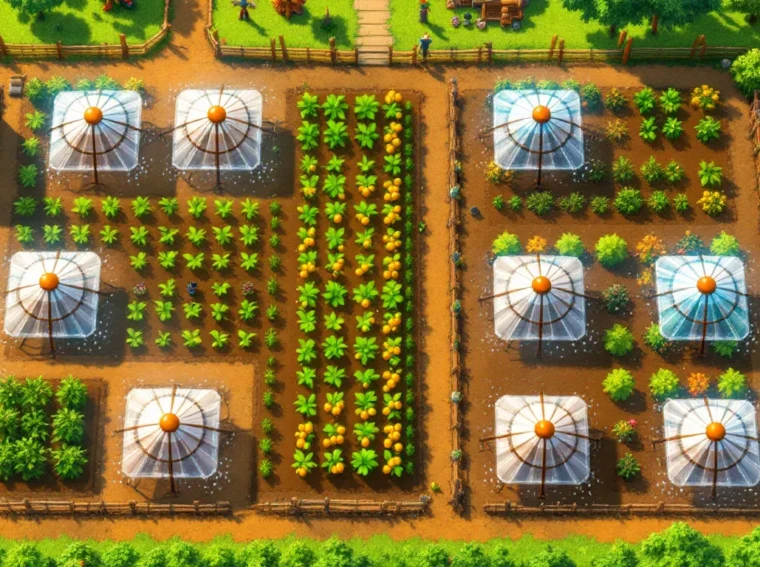
If you’re still hand-watering crops in Stardew Valley, you’re wasting half your day on busywork. Sprinklers are the turning point where your farm transforms from a grind into a well-oiled machine, freeing up energy for the mines, social life, or expanding your operation. But not all sprinklers are created equal, and placing them wrong can actually cost you efficiency.
This guide breaks down everything you need to know about sprinklers in Stardew Valley: how they work, when to upgrade, optimal layouts for each tier, and advanced strategies that veteran players swear by. Whether you’re planting your first parsnips or optimizing your Ginger Island farm, you’ll walk away with actionable setups that maximize every tile.
Key Takeaways
- Sprinklers in Stardew Valley automate watering and free up energy for mining, fishing, and social activities by eliminating hand-watering bottlenecks.
- Quality Sprinklers unlock at Farming Level 6 with 8-tile coverage and serve as the mid-game workhorse, while Iridium Sprinklers at Level 9 cover a 5×5 grid (24 tiles) for endgame efficiency.
- Optimal sprinkler placement follows grid patterns—place Quality Sprinklers in a checkerboard pattern 3 tiles apart, and Iridium Sprinklers 5 tiles apart—to eliminate overlap and dead zones.
- Pressure Nozzle and Enricher attachments extend sprinkler range and automate fertilizer application, transforming large-scale farms into hands-off operations.
- Plan your sprinkler progression to transition from Quality to Iridium Sprinklers by Year 2, while always integrating scarecrows and Junimo Huts to prevent crop loss and enable full automation.
Why Sprinklers Are Essential for Your Stardew Valley Farm
Sprinklers automate watering, plain and simple. Each morning, they water adjacent tiles so you don’t have to. That’s energy saved, time saved, and sanity preserved, especially once you’re managing 100+ crops.
Without sprinklers, you’re locked into a tedious routine: wake up, refill the watering can, water crops, then scramble to do anything else before 2 PM. It’s functional for the first few weeks, but it doesn’t scale. By Summer Year 1, manual watering becomes a bottleneck that limits how much you can plant and how much profit you can pull.
Sprinklers flip that equation. They let you plant larger fields without lifestyle penalties. More crops mean more income, which accelerates every other goal, whether that’s upgrading tools, completing the Community Center, or funding that Deluxe Barn. The sooner you automate watering, the sooner your farm starts working for you instead of the other way around.
Players who delay sprinklers often hit a wall mid-game. They can’t expand their crop count without sacrificing mining, fishing, or social progress. Sprinklers solve that tension and open up the full game.
The Three Types of Sprinklers in Stardew Valley
Basic Sprinkler: Your First Step Toward Automation
Basic Sprinklers water the 4 orthogonally adjacent tiles, up, down, left, right. That’s it. They unlock at Farming Level 2, making them accessible early, but their coverage is weak.
Most experienced players skip them entirely or use one or two as a stopgap. The material cost (1 Copper Bar + 1 Iron Bar) isn’t trivial when you’re short on ore, and the 4-tile coverage barely justifies the investment. You’ll replace them fast.
If you do use Basic Sprinklers, treat them as a temporary crutch for a small 3×3 plot. Place the sprinkler in the center: it’ll water the four surrounding tiles. Don’t try to scale a full farm with them, it’s not worth the copper.
Quality Sprinkler: The Mid-Game Workhorse
Quality Sprinklers are the backbone of mid-game farming. They water an 8-tile ring around themselves (all adjacent tiles, including diagonals). Unlocked at Farming Level 6, they require 1 Iron Bar, 1 Gold Bar, and 1 Refined Quartz.
This is where sprinkler farming actually becomes viable. An 8-tile coverage is enough to design efficient grids, and the materials, while not cheap, are farmable by mid-Summer Year 1 if you’ve been hitting the mines.
Quality Sprinklers dominate from late Year 1 through early Year 2 for most players. You can blanket your fields with them and finally plant at scale. They’re also common loot from treasure rooms in the mines and occasionally sold by Krobus on Fridays for 10,000g, which is steep but saves crafting time.
Don’t sleep on Quality Sprinklers. Even after you unlock Iridium ones, you’ll keep Quality Sprinklers for secondary plots, the Greenhouse, or Ginger Island until you’ve got abundant late-game resources.
Iridium Sprinkler: The Ultimate Watering Solution
Iridium Sprinklers water a 5×5 grid (24 tiles total). They’re the endgame standard, unlocked at Farming Level 9, and cost 1 Gold Bar, 1 Iridium Bar, and 1 Battery Pack.
The jump from Quality to Iridium is massive, 24 tiles versus 8. With Iridium Sprinklers, you can cover your entire farm with minimal units, freeing up space and simplifying layouts. Battery Packs are the real gate here: you’ll need Lightning Rods or reliable Skull Cavern runs to stockpile Iridium.
Most players transition to Iridium Sprinklers in Year 2, once they’ve reached the bottom of the mines and established passive Battery Pack production. Once you do, there’s no reason to craft anything else. They’re the gold standard for every farming setup from that point forward.
How to Unlock and Craft Each Sprinkler Type
Crafting Recipes and Material Requirements
You unlock sprinkler recipes by leveling your Farming skill. Here’s the breakdown:
- Basic Sprinkler: Farming Level 2 | 1 Copper Bar + 1 Iron Bar
- Quality Sprinkler: Farming Level 6 | 1 Iron Bar + 1 Gold Bar + 1 Refined Quartz
- Iridium Sprinkler: Farming Level 9 | 1 Gold Bar + 1 Iridium Bar + 1 Battery Pack
Refined Quartz comes from smelting regular Quartz (found in the mines) or recycling trash like broken glasses and CDs in a Recycling Machine. Battery Packs are trickier, you get them from Lightning Rods during storms or occasionally as loot in Skull Cavern.
Iridium Bars require Iridium Ore, which is rare until you’re farming Skull Cavern or panning in the mountain river. It’s the bottleneck for most players trying to scale up sprinkler production in Year 2.
Alternative Ways to Obtain Sprinklers
You don’t have to craft every sprinkler. Here are faster methods:
- Krobus sells 1 Iridium Sprinkler every Friday for 10,000g. Expensive, but instant.
- Treasure rooms in the mines drop Quality Sprinklers semi-regularly. Check every floor.
- Traveling Cart occasionally stocks sprinklers at inflated prices (1,250–2,500g for Quality, higher for Iridium). Worth it if you’re cash-rich and resource-poor.
- Gunther’s Museum reward: Donate 15 artifacts/minerals to receive a Quality Sprinkler.
If you’re rushing sprinklers, focus mining efforts on Iron and Gold floors (40–79) and stockpile Quartz early. By the time you hit Farming 6, you’ll be ready to craft immediately.
Optimal Sprinkler Layout Strategies for Maximum Efficiency
Best Layout Patterns for Quality Sprinklers
Quality Sprinklers water the 8 tiles surrounding them, which makes layout planning crucial. The most tile-efficient setup is a 3×3 grid with the sprinkler in the center, that’s 8 watered tiles per sprinkler, zero waste.
To scale this, place Quality Sprinklers in a checkerboard pattern, 3 tiles apart in all directions. This maximizes crop density while minimizing dead zones. Many players use a 6×6 or 9×9 repeating grid, leaving narrow paths for movement.
Another common pattern: staggered rows. Place sprinklers every 3 tiles horizontally and offset each row by 1–2 tiles vertically. This creates clean rows and leaves space for scarecrows or decorative pathing.
Avoid clumping Quality Sprinklers. Their limited range means overlap wastes coverage, and gaps leave crops unwatered. If you’re tight on materials, prioritize filling one section completely before expanding.
Iridium Sprinkler Grid Configurations
Iridium Sprinklers cover a 5×5 area, so optimal placement is every 5 tiles in both directions. This creates a perfectly repeating grid with zero wasted coverage and no overlap.
For maximum crop density, align Iridium Sprinklers in straight rows and columns, each 5 tiles apart. This setup scales infinitely and leaves room for pathing or additional structures. Some players prefer a 10×10 “superblock” layout: 4 Iridium Sprinklers in a square formation covering 100 tiles total, with a scarecrow in the center.
If you’re using Junimo Huts, position them centrally within a 17×17 radius and arrange Iridium Sprinklers to fill that zone. Junimos will auto-harvest crops within range, and the sprinklers ensure everything stays watered without player input.
According to veteran players on community forums, the cleanest late-game setup is a pure Iridium grid with minimal pathing, just enough to navigate without trampling crops. Efficiency over aesthetics.
Incorporating Scarecrows and Paths Into Your Design
Scarecrows protect an 8-tile radius (248 tiles for standard scarecrows, 272 for Deluxe). You’ll need them unless you’re fine with crows stealing 1–4 crops daily.
The trick is integrating scarecrows without sacrificing sprinkler coverage. Place them on tiles that aren’t watered by your sprinklers, typically dead zones between grid sections or at the edges of your farm. For Quality Sprinkler grids, drop scarecrows every 12–16 tiles. For Iridium grids, every 15–20 tiles works.
Paths (stone, wood, or gravel) are optional but helpful. They prevent accidental hoe/pickaxe misclicks that destroy crops and make navigation faster. Many players run narrow 1-tile-wide paths between sprinkler blocks or create a grid of walkways that double as visual guides.
Don’t overthink paths early, focus on sprinkler placement first, then add paths once your layout is stable. You can always retrofit later.
Sprinkler Attachments and Upgrades You Need to Know
Pressure Nozzle: Extended Range for Your Sprinklers
The Pressure Nozzle is a sprinkler attachment that increases watering range by 1 tile in all directions. That means Quality Sprinklers jump from 8 tiles to 12, and Iridium Sprinklers expand from 24 tiles to 48.
You unlock the Pressure Nozzle recipe at Farming Level 9 (same as Iridium Sprinklers) and craft it with 1 Iron Bar, 1 Gold Bar, and 1 Refined Quartz. To attach it, hold the Pressure Nozzle and right-click a placed sprinkler.
Pressure Nozzles are most useful for Quality Sprinklers, since they push the coverage closer to Iridium levels without the Battery Pack cost. For Iridium Sprinklers, they’re overkill unless you’re trying to cover awkward farm shapes or maximize Greenhouse efficiency.
One nozzle per sprinkler, and you can’t stack them. Remove attachments by right-clicking the sprinkler with an empty hand.
Enricher: Automatic Fertilizer Application
The Enricher attachment auto-applies fertilizer to all tiles watered by that sprinkler at the start of each season. It requires 1 Iridium Bar and 40 Clay, unlocked at Farming Level 9.
This is a game-changer for large-scale farming. Instead of manually fertilizing hundreds of tiles, you load fertilizer into the Enricher once per season (or less, if using Deluxe Fertilizer), and it handles the rest. It works with Basic, Quality, and Deluxe Fertilizer, whatever you load.
Enrichers save massive amounts of time on Spring 1, Summer 1, etc., when you’re replanting entire fields. The Clay cost is steep (40 per Enricher), but if you’ve been digging or using a hoe regularly, you’ll have stockpiles. Otherwise, buy Clay from Robin for 100g each.
Pro tip: Enrichers work great in the Greenhouse and on Ginger Island, where you’re planting high-value crops year-round and want Deluxe Fertilizer coverage with zero manual effort.
When to Transition Between Sprinkler Tiers
Timing your sprinkler upgrades is about balancing material availability with farming ambitions. Here’s the typical progression:
Spring Year 1: Hand-water or use 1–2 Basic Sprinklers for a small 3×3 plot. Focus on unlocking the mines and hitting Farming Level 6 by mid-Summer.
Summer Year 1: Transition to Quality Sprinklers as soon as you hit Farming 6 and have Gold Bars. This is the breakpoint where you can plant 50+ crops without burning all your energy on watering. Aim for at least 4–8 Quality Sprinklers by Summer 1.
Fall Year 1 / Winter: Stockpile Iridium Ore and Battery Packs. If you’re aggressive in Skull Cavern or got lucky with Iridium Nodes on floors 115–119, you might craft 1–2 Iridium Sprinklers before Spring Year 2. Otherwise, keep using Quality Sprinklers.
Spring Year 2 onward: Full Iridium conversion. By now, you should have steady Iridium income from Skull Cavern, Statue of Perfection, or other sources. Replace Quality Sprinklers in your main fields first, then Greenhouse and Ginger Island.
Don’t force the transition early. If you’re short on Battery Packs or Iridium, Quality Sprinklers are more than sufficient through Year 2. The jump to Iridium is a luxury, not a necessity, though it does feel great.
Some players never craft Basic Sprinklers. If you can rush Farming 6 by mid-Summer Year 1 (totally doable with Parsnips and Potatoes), you skip the Basic tier entirely and go straight to Quality. That’s the min-max route, according to efficiency-focused guides on Twinfinite.
Common Sprinkler Mistakes to Avoid
Overlapping coverage is the #1 mistake. New players often place sprinklers too close, wasting materials on redundant watering. Plan your grid first, measure distances, and leave exactly the right amount of space between units.
Forgetting scarecrows kills profits. Crows target random crops daily, and without scarecrow coverage, you’ll lose 5–10% of your harvest over a season. Always integrate scarecrows into your sprinkler layout from day one.
Ignoring Junimo Huts in late-game. Once you unlock them, Junimos auto-harvest crops within their radius. If you’re still manually harvesting with Iridium Sprinklers everywhere, you’re doing half the work for no reason. Combine Junimo Huts with sprinkler grids for full automation.
Placing sprinklers on non-tillable ground. Sprinklers need to sit on tilled soil or valid flooring (like paths). If you place one on grass or untilled dirt, it won’t function. Always hoe the tile first.
Using Basic Sprinklers past early-game. There’s no reason to keep Basic Sprinklers once you have Quality ones. Recycle them (pick them up with your pickaxe or axe) and reclaim the materials. Don’t let sunk-cost fallacy lock you into bad infrastructure.
Not planning for crop growth stages. Some crops (like Melons or Pumpkins) are harvested once: others (Blueberries, Cranberries) regrow. For multi-harvest crops, sprinkler placement is permanent for the season, so design accordingly. Don’t block access to crops you’ll need to walk through repeatedly.
Advanced Tips for Sprinkler Farming
Greenhouse Sprinkler Optimization
The Greenhouse has 120 plantable tiles in a 10×12 grid. The most efficient setup is 6 Iridium Sprinklers arranged in a 2×3 grid, each covering a 5×5 area with minimal overlap. This waters all 120 tiles with zero waste.
Alternatively, use 4 Iridium Sprinklers with Pressure Nozzles to cover the entire space. The Pressure Nozzle extends range enough that 4 units can blanket the Greenhouse, leaving room for a few decorative items or a Junimo Hut.
For Quality Sprinklers, you’ll need around 15 units in a tight grid. It’s functional but cluttered, Iridium is the better long-term investment here.
Greenhouse crops never die, so pair your sprinklers with Deluxe Fertilizer (which lasts forever in the Greenhouse) and plant Ancient Fruit, Starfruit, or other high-value crops. Add an Enricher to one sprinkler for easy fertilizer coverage, as noted in optimization discussions on GameSpot.
Ginger Island Farm Sprinkler Strategy
Ginger Island’s farm has 878 tillable tiles, making it larger than your main farm’s starting plot. It’s also always Summer, meaning you can plant any warm-weather crop year-round.
The best approach: full Iridium Sprinkler coverage in a clean grid layout. You’ll need around 30–35 Iridium Sprinklers to cover the entire farmable area, depending on how much space you leave for paths and structures.
Many players divide the island farm into quadrants, each with its own crop type, Starfruit in one section, Pineapples in another, Ancient Fruit elsewhere. This makes harvesting and replanting more organized.
Junimo Huts are even more valuable here because of the farm’s size. Place 2–3 Huts to cover the whole space, and you’ll never manually harvest again. Combine that with Iridium Sprinklers + Enrichers, and the island farm becomes a fully automated profit engine.
Don’t bother with Quality Sprinklers on Ginger Island unless you’re extremely low on Iridium. The space is too large, and the efficiency loss isn’t worth it. By the time you unlock the island (completing the Community Center or Joja route), you should have enough Iridium to go all-in.
One last trick: plant Ancient Seeds on Ginger Island and leave them permanently. They regrow every 7 days, work year-round in the island climate, and combined with Deluxe Speed-Gro, they’re the highest-value crop in the game per tile per year. Pair that with optimized profession choices for maximum profit scaling.
Conclusion
Sprinklers are the difference between a hobby farm and a scalable operation. Basic Sprinklers get you started, Quality Sprinklers carry the mid-game, and Iridium Sprinklers define your endgame setup. Pair them with smart layouts, scarecrow coverage, and attachments like Pressure Nozzles and Enrichers, and you’ll never waste energy on watering again.
The real win is freedom, time to mine, fish, build relationships, or chase perfection. Start small, upgrade methodically, and by Year 2, your farm will run itself while you focus on the fun stuff. Now get out there and automate.