
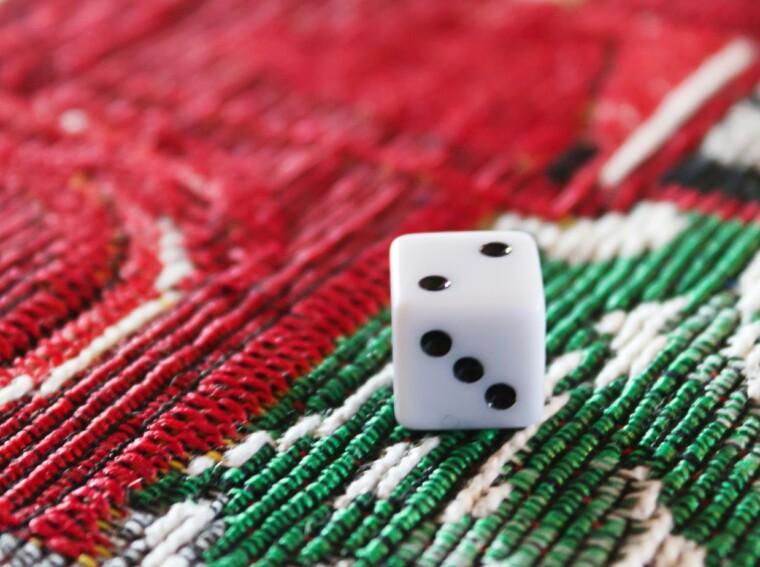
Dice feel timeless. Small cubes with simple markings and a roll that decides everything. It is easy to imagine people playing dice games thousands of years ago, because they actually did.
Many historians consider dice and their early versions to be among the oldest gaming tools ever created.
What makes dice fascinating is how little the core idea changed. A roll creates a random result. That idea worked in ancient cities and still works in gaming rooms and casinos today. The environments changed. The basic appeal stayed exactly the same.
Dice Games In The Modern World
Dice games now exist in more places than ever. Casinos still feature classic dice games like craps, but digital versions expanded how people interact with them. Online platforms allow dice games to run constantly without physical tables.
Technology now drives most digital dice games. Instead of physical cubes, software systems generate outcomes using random number generators. These systems simulate randomness and allow games to run smoothly across all kinds of devices. The roll still feels immediate, even though it happens digitally.
Live dealer games created a middle ground. Real dice are rolled on camera and streamed to players. This keeps the physical feel alive while still using modern streaming technology.
Payments also changed how people interact with these games. Digital wallets and crypto payments now appear on many online platforms. A crypto dice game may be the same as a casino game played for decades. It has made these ancient games more high-tech and modern. Transactions happen quickly – the focus stays on gameplay rather than setup. This combination of old mechanics and modern delivery helped dice games stay relevant.
Things change so quickly in gaming. It isn’t even that long since the very first consoles were released (not in the grand scheme of gaming).
Dice May Be Among The Oldest Gaming Tools Ever
Dice aren’t just old – they’re truly ancient. Evidence shows dice and dice-like objects existed thousands of years ago. The age of Egyptian and Greek ancient civilizations (and even older).
Historic discoveries suggest dice were being used long before the age of written history. This makes them hard to date properly, you can imagine. Some early examples date back to between 2800 and 2500 BCE. Dice and full board games were found in an ancient settlement known as the Burnt City in what has now become modern-day Iran.
Other discoveries show dice appearing across multiple ancient civilizations. Dice have been found in Egyptian tombs from around 2000 BCE. Some similar objects appeared in ancient China in around 600 BCE.
This widespread presence suggests dice were not invented in one single place. It seems different cultures likely developed similar ideas at different times.
Dice Before Dice: Knucklebones And Fortune Tools
Before modern dice existed, people used natural objects. Animal ankle bones or knucklebones were thrown to produce random results. These were often used for games, but also for divination and decision-making.

Knucklebones were sometimes marked to create different results, making them early versions of dice. There were even games specifically named after the knucklebones used. People eventually began creating shaped gaming pieces from stone or clay. These gradually turned into the six-sided dice still used today.
Dice In Early Civilizations
Dice appeared in many early societies. In the Indus Valley civilization, terracotta dice were found dating back to roughly 2500–1900 BCE. Some even used numbering patterns similar to modern dice.
Ancient board games often used dice for movement. Games like the Royal Game of Ur (which dates back to the third millennium BCE) used pyramid-shaped dice to control movement across boards.
There is also evidence that dice games existed in ancient Mesoamerica around 5,000 years ago. This is based on archaeological findings linked to early gaming boards.
This global spread shows how natural dice mechanics are. Rolling an object to create a random result is simple and gives games a random outcome.
Dice And The Birth Of Probability Thinking
For most of history, people believed dice results came from fate. That changed in the 16th century when mathematicians began studying randomness and probability using dice.
This shift helped shape modern mathematics and statistics. Dice were not just gaming tools anymore. They became tools for understanding chance itself.
Materials And Designs Changed Over Time
Early dice were made from things like bone or stone. Later versions used metal and even crystal.
Number arrangements also evolved. Some ancient dice used different opposite-face systems before the modern pattern became standard. Archaeological finds show that different numbering systems were used in various regions and time periods.
Dice games survived because they are easy to understand. A roll creates a random outcome. A result ends uncertainty. That structure works across cultures and eras.
Dice also adapt easily. They fit board games and casino games. The same basic idea works in all of them – to give a vital element of random decision-making.
The Future Of Dice Games
They’ve survived this long – dice games are going nowhere.
Modern technology will continue changing how dice appear, but the concept will likely remain the same. Randomness creates shared moments.
Dice games might be some of the oldest games humans ever played. The fact that they still exist today says everything about how strong that simple idea really is.